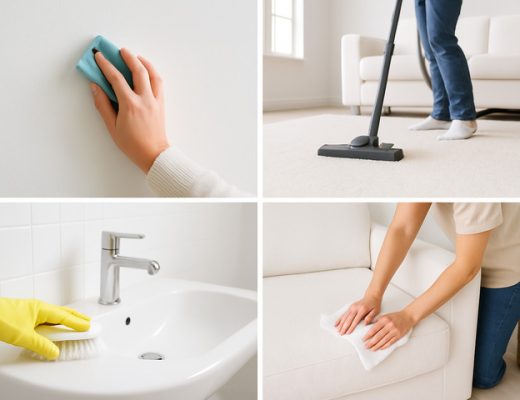
Have you ever stared at your painted walls and thought how they have the ability to gather fingerprints, stains and inexplicable marks despite the fact that all the rest of the surrounding area appears immaculate and clean? Walls also preserve the story of ordinary life, the handprints of children, the accidental scuff marks, the cooking smells, the dust and even drawings of crayons. They occupy the biggest space in your house, but usually tend to be the first to be left out when cleaning.
Cleaning painted walls is not merely wiping away the marks that you can see, but also taking care of your paint finish, keeping the colour intact, and keeping your living room looking fresh. The painted walls can be bright, free of stains, and beautiful once more with the help of the appropriate cleaning techniques, the delicate products, and a bit of patience, without any loss of their shine or peeling away of paint.
1. Realise What Paint You Have On the Walls
Before undertaking it, one should have information on whether the wall is painted or not, as per cleaning professionals. The different kinds of paints are receptive to moisture and cleaners. Semi-gloss and gloss paints are easy to wash and they are commonly used in bathrooms and kitchens. The flat or matte finish is weak and needs more care as it can easily lose the luster when scrubbed too vigorously. Satin finish is in between and may normally be subjected to light washing. The paint type can be used to select the appropriate cleaning method and avoid fading, peeling or patchy spots.
2. Begin with Dry Dusting
Always use dry cleaning first, then use water. especially during vacate cleaning. Walls accumulate dust as a result of fans, open windows and daily movement of people in the house. Unless this dust is removed initially, it will be combined with water and therefore will be streaked upon wiping. Clean it with a microfiber cloth, a duster with a long handle or even a vacuum cleaner with a brush. Also, move downwards in order to prevent dust that falls on already cleaned surfaces. Pay attention to corners, edges, and towards the ceiling, where cobwebs or fine dust are easily present without interest.
3. Make a Weak Cleaning Solution
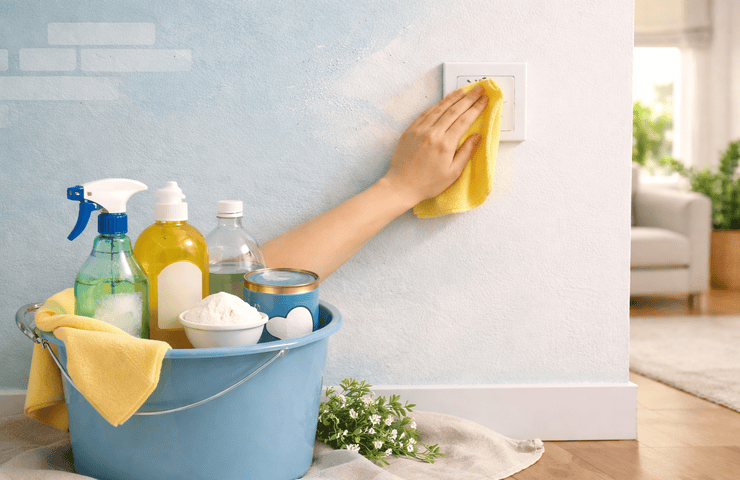
A soft detergent should be used to paint the walls. A tiny bit of mild dish soap moistened in hot water can be used to address daily stains and marks. A little white vinegar must be added to the solution to greasy spots or the smoke deposits of the kitchen. It must not be used with strong cleaners like bleach, ammonia, scouring powder, or coarse liquids, which are apt to damage paint, neutralise colour and smooth finish. One should always put a cleaner in a small and hidden section of the wall so that there is no possibility of the cleaner ruining the finish.
4. Clean the Walls with the Right Method
Wipe with a soft cloth or sponge which is wrung out in the solution. The cloth must not be soaked down but slightly wet, as that will result in streaks, bubbles, or peeling in the long run. Wipe in bits rather than wiping the entire wall size. Wash the cloth frequently in order not to re-spread the dirt on the wall. Do not scrub in any circular movements and especially the matte paint as this can result in shiny or irregular spots.
5. Target High-Touch and High Usage Points
There are sections of the wall which receive higher stains compared to others. Fingerprints, smudges and grease spots are common in areas surrounding switches, door frames, staircases, kids’ rooms, hallways and the walls of the kitchen. Wash these parts carefully and tenderly. Smoke or oil stains can also be present on kitchen walls, and they should be cleaned several times with light cleaning rather than one rough cleaning. The bathrooms can have signs of moisture that must be wiped and dried to avoid the development of mould or mildew.
6. Stubborn Stains: Handle with Care
Some of the marks, like crayon lines, shoe scuffs or sticky spots, are not easy to clear. Cleaning the hard surfaces should not be vigorous, but it should be done with the mild stain removers required on the painted surfaces. Sometimes tough stains can be treated with a small amount of baking soda paste, though it is necessary to be very careful. It is always best to test somewhere hidden so that one does not destroy the paint. When a stain fails to fade after a few light strokes, one should prefer touching up instead of rubbing the wall. This method works well during kitchen cleaning where grease marks are common.
7. Dry the Walls After Cleaning
Wet walls should not be left unattended after washing. The different kinds of paints are receptive to moisture and cleaners. Semi-gloss and gloss paints are easy to wash and they are commonly used in bathrooms and kitchen. The flat or matte finish is weak and needs more care as it can easily lose the luster when scrubbed too vigorously. It is necessary to dry properly to preserve colour, avoid streaks and make walls look evenly cleaned. This is among the most significant yet, not much-heeded steps in cleaning the wall.
8. Touch-up Paint Could Be Considered to Be Stubborn
It might leave traces which are just not going to fade away despite thorough cleaning. Rather than ruining the wall through rough scrubbing, carefully paint it with similar paint. It is a good idea to have a little container of original wall paint in the house. Faded or stained areas get refreshed in seconds by light touch-ups. When one needs to do a lot of touch-ups over bigger portions, then it may be possible that the wall has to be repainted, particularly when the paint is very old.
Conclusion
Clean painted walls are preferable also, and it brightens up any room, making it look bigger and friendlier. Its use can be performed without affecting the paint of the walls, expert cleaning solutions, soft clothes, and gentle wiping techniques, along with proper drying can be used to wash walls safely. Appreciating the type of paint, targeting high-contact zones and avoiding the accumulation of the same will aid in keeping the colour and finish intact over many years. The appropriate cleaning technique not only gets rid of the stains but also leaves the entire mood of the house fresh, lively and well maintained.